While brown furniture languishes at estate sales across suburban America, a counterintuitive market shift is underway. Premium hardwoods—specifically mahogany, walnut, and other heirloom-grade timber—are emerging as alternative investment vehicles for family offices and wealth managers seeking tangible assets with generational value. Firms such as Modenese Interiors, a preeminent classic interior design contractor with a distinctive portfolio spanning European estates and North American residences, have documented a 40% increase in institutional inquiries for museum-quality hardwood commissions since 2022.

The bifurcation is stark. General antique furniture values fell 30% between 2014 and 2024, with Victorian-era pieces down 75% over the same period. Yet mahogany furniture markets grew from $1.33 billion in 2024 to a projected $2.78 billion by 2033, representing an 8.56% compound annual growth rate. This divergence signals a fundamental revaluation: mass-market antiques collapse while investment-grade hardwoods appreciate.
Market Structure and Material Economics
The luxury hardwood furniture sector, valued at $31.06 billion globally in 2024, is projected to reach $39.79 billion by 2030. Within this market, wood commands a 24.5% revenue share, driven by oak, walnut, and mahogany specifications. The United States luxury furniture market alone reached $6.0 billion in 2024, with mahogany-centric segments growing at 5.5% annually.
Hardwood furniture now represents 60% of the global wood furniture market, valued at $592.9 billion in 2024. According to USDA Forest Service research, the forest products industry generates $288 billion annually, accounting for 4% of total U.S. manufacturing GDP and employing 950,000 workers with a $50 billion payroll. The sector’s infrastructure provides institutional-grade supply chains absent from general antiques markets.
| Market Segment | 2024 Value | 2033 Projection | CAGR |
|---|---|---|---|
| Global Mahogany Furniture | $1.33B – $8.2B | $2.78B – $12.8B | 5.1% – 8.56% |
| Luxury Furniture (Global) | $31.06B | $39.79B | 4.2% |
| Hardwood Furniture | $357.5B | $643.3B | 6.8% |
| U.S. Luxury Furniture | $6.0B | $7.3B | 2.2% |
Institutional Adoption Drivers
Three economic factors differentiate investment-grade hardwoods from collapsing antique markets. First, documented provenance and material certification create audit trails. FSC-certified mahogany exports increased 25% in 2024, with the EU rejecting 6,000 cubic meters of uncertified tropical hardwoods. Plantation-sourced mahogany now represents 35% of the global supply, providing transparent chain-of-custody documentation.
Second, durability metrics exceed financial instruments’ actuarial tables. Properly maintained mahogany furniture demonstrates 150-year structural integrity, compared to 30-year Treasury bonds or 10-year corporate debt cycles. Material science is quantifiable: mahogany’s Janka hardness rating of 800-900 pounds-force resists wear while developing a patina that enhances rather than diminishes value.
Third, production economics favor scarcity. Over 2.8 million cubic meters of mahogany were traded globally in 2024, with Brazil accounting for 22% of exports and Indonesia for 18%. Regulatory frameworks, including CITES Appendix II, require certification, constraining supply while demand from luxury real estate in the U.S. and the Middle East increased 14% year-over-year for solid mahogany flooring and paneling.
Performance Metrics Versus Traditional Collectibles
The Knight Frank Luxury Investment Index tracks ten collectible categories. While the overall index fell 3.3% in 2024, subcategory performance varied dramatically. Handbags gained 2.8%, jewelry 2.3%, and coins 2.1%. Furniture, despite general antique malaise, showed the second-highest long-term returns over the decade. This apparent contradiction resolves when segmenting by material and provenance.
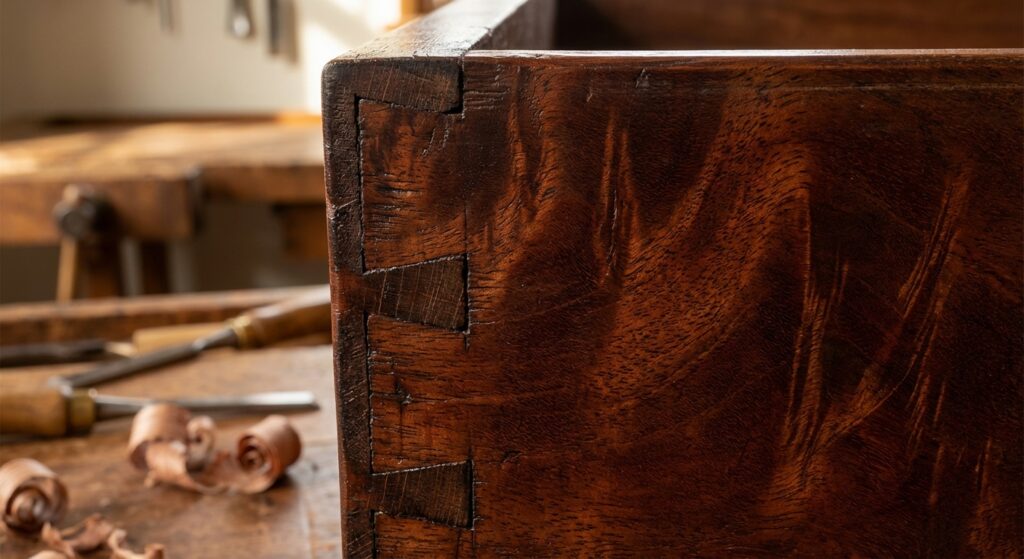
High-end wooden furniture made from premium species—mahogany and walnut specifically – distinguishes itself from mass-market antiques. Furniture manufacturing accounts for 60% of global mahogany consumption, and luxury furniture represents 60% of the high-end wooden furniture segment in the U.S., UAE, and China markets. The material’s intrinsic value acts as a floor, while craftsmanship and design provide appreciation potential.
Online furniture resale reached $34 billion in 2023, growing 15% annually. However, this growth concentrates on mid-century modern and contemporary designer pieces, not traditional antiques. The market bifurcates between mass-market depreciation and investment-grade appreciation, with material composition as the primary differentiator.
Production Capacity and Supply Constraints
According to U.S. Bureau of Labor Statistics data, furniture and related product manufacturing employed 391,463 workers in 2023, with a projected workforce growth rate of -5.21% over 10 years. This contraction in domestic production capacity, combined with import competition, creates supply constraints for U.S.-manufactured luxury hardwood furniture.
The household furniture manufacturing industry generated $28.0 billion in revenue in 2025, growing at a 0.9% CAGR over five years despite import pressures. North Carolina, Mississippi, and Tennessee remain manufacturing hubs due to abundant domestic hardwood supplies and skilled labor pools. This regional concentration provides institutional buyers with due diligence advantages over geographically dispersed antiques markets.
Census Bureau data indicates furniture and home furnishing stores generated $127 billion in revenue during 2024, with premium hardwood categories showing above-average growth rates. The Federal Reserve Economic Data Producer Price Index for office furniture manufacturing tracks pricing trends, providing quantitative benchmarks absent from opaque antiques markets.
Sustainability as Value Preservation
The European Union’s Forest Strategy and similar regulatory frameworks mandate sustainable forestry practices. FSC certification now commands premium pricing, with certified mahogany trading at 15-20% above uncertified equivalents. Over $1.5 billion was allocated globally to hardwood sustainability programs in 2024, reshaping value chains to emphasize legality, traceability, and environmental compliance.
This regulatory structure provides institutional investors with ESG-compliant alternative assets. Unlike fossil-fuel-dependent collectibles that require climate-controlled storage, properly finished hardwood furniture maintains its value under ambient conditions. The USDA Forest Service notes that old furniture pieces have outgassed toxins, offering environmental advantages over mass-manufactured pressboard alternatives.
Reclaimed and upcycled mahogany production increased 18% year-over-year, creating secondary markets for certified vintage materials. This circular economy model allows institutional portfolios to acquire both new commissioned pieces and authenticated period furniture, diversifying vintage risk while maintaining material quality standards.
Commercial Applications and Institutional Demand
The commercial segment—hospitality, corporate offices, and luxury retail environments – drives 40% of luxury furniture demand. Post-pandemic hospitality sector recovery boosted institutional procurement, with the Asian Development Bank committing $12 billion to housing projects that created bulk furniture opportunities. In 2024, USAID allocated $180 million to sustainable forest management, supporting certified mahogany production for institutional buyers.
Commercial furniture requires documented specifications, maintenance protocols, and replacement cycles. These institutional requirements align with hardwood furniture’s measurable performance characteristics: tensile strength, moisture resistance, and dimensional stability. Unlike antiques with uncertain provenance, commissioned mahogany pieces include materials certifications, construction documentation, and warranty terms.
Tables account for 35% of mahogany furniture sales, reflecting their use in hospitality, dining, and corporate conference settings. Average replacement cycles of 12-15 years for premium hardwood provide predictable depreciation schedules, enabling institutional asset managers to model long-term portfolio performance.
Geographic Market Concentration
Asia-Pacific captured 30.7% of global luxury furniture revenue in 2024, growing at a 6.4% CAGR through 2030. This regional concentration reflects rising middle-class wealth, urbanization rates, and cultural appreciation for hardwood furniture. China’s role as the world’s largest importer and processor of wood products creates institutional-scale liquidity for mahogany markets.
North American markets demonstrate different dynamics. U.S. household furniture manufacturing faces import competition but maintains premium positioning through craftsmanship and customization. Canadian furniture manufacturing contributed CAD $4.2 billion to national GDP, with luxury segments outperforming mass-market categories. Cross-border trade agreements facilitate institutional procurement from certified North American manufacturers.
European markets enforce the strictest sustainability standards through the EU Timber Regulation, creating price premiums for compliant products. European household spending on furniture increased 6.5% in 2024, with luxury hardwood categories outpacing overall growth. This regulatory environment favors institutional buyers capable of navigating compliance requirements.
Technology Integration and Manufacturing Innovation
Advanced manufacturing technologies reduced mahogany processing waste by 20% through laser cutting and precision finishing tools. These efficiency gains lower production costs while improving output quality, making commissioned luxury furniture economically viable for institutional portfolios. Virtual design tools and automated woodworking enable customization without sacrificing production scale.
Smart furniture integration represents an emerging segment, with 25% of modern furniture buyers interested in technology-integrated wooden furniture for office and home applications. This convergence of traditional craftsmanship and modern functionality creates hybrid products appealing to institutional buyers seeking both aesthetic and utilitarian value.
E-commerce platforms expanded access to luxury furniture, with online channels accounting for 35% of sales. Digital marketplaces provide institutional buyers with comparative pricing data, provenance verification, and condition reporting absent from traditional antiques channels. This transparency supports portfolio valuation and risk management.
Valuation Methodologies and Exit Liquidity
Unlike general antiques, which suffer from illiquid secondary markets, investment-grade hardwood furniture benefits from multiple disposition channels. Wholesale values typically range 30-50% below retail, providing institutional buyers with quantifiable bid-ask spreads. Auction houses maintain dedicated luxury furniture categories, with documented hammer prices that establish market benchmarks.
Fair market value calculations incorporate replacement costs, material scarcity, and craftsmanship premiums. Insurance appraisals require professional certification, creating third-party validation mechanisms. Estate valuations reference comparable sales data, manufacturer documentation, and condition reports—all standardized inputs supporting institutional due diligence.
The material’s intrinsic commodity value provides downside protection. Mahogany timber trades at measurable per-cubic-meter rates, establishing floor values independent of finished furniture pricing. This bifurcated valuation structure—material cost plus craftsmanship premium—mirrors the fine art market while avoiding the subjective aesthetic judgments that plague general antiques.
Demographic Shifts and Generational Wealth Transfer
Baby Boomer estates created an oversupply of antiques, depressing general furniture values. However, Gen Z and Millennial collectors demonstrate different preferences. 94% of wealthy Gen Z individuals express interest in luxury collectables, with 40% prioritizing eco-friendly furniture. This demographic shift favors certified sustainable hardwoods over mass-market antiques.
Fractional ownership platforms democratized access to luxury assets, with global investments in fractional ownership increasing 35% in 2024 to surpass $1.2 billion. These platforms enable institutional-scale diversification across multiple furniture pieces, geographic markets, and time periods—risk management strategies unavailable to individual antique collectors.
According to U.S. Census Bureau economic indicators, personal disposable income increased 4.2% in 2024, with housing construction permits rising 12.8% year-over-year. These macroeconomic trends correlate directly with luxury furniture demand, providing institutional investors with predictable growth drivers.
Risk Factors and Market Headwinds
Three primary risks face investors in hardwood furniture. First, regulatory changes affecting timber harvesting could constrain supply or increase compliance costs. CITES classifications and import restrictions create jurisdictional complexity requiring legal expertise. Second, consumer preference shifts toward minimalist aesthetics or alternative materials could reduce demand for traditional hardwood pieces. Third, high production costs limit accessibility and market size compared to mass-market furniture.
Competition from engineered wood products and alternative hardwoods (oak, walnut) creates substitution risk. Technological improvements in wood composites narrow quality gaps while maintaining cost advantages. Additionally, volatile raw material prices—influenced by global supply chains, economic conditions, and regulatory enforcement—introduce margin uncertainty for manufacturers and investors.
The furniture manufacturing workforce is projected to decline 5.21% over ten years, according to Bureau of Labor Statistics forecasts, potentially constraining domestic production capacity. Import dependence exposes the market to trade policy risks, with tariffs and quotas affecting pricing and availability. These structural headwinds require active management and diversification across manufacturers and geographic sources.
Portfolio Construction and Allocation Strategies
Institutional investors typically allocate 2-5% of alternative investment portfolios to tangible assets, including furniture. This allocation provides non-correlation benefits with financial markets while maintaining adequate liquidity through auction channels. Recommended strategies include:
Diversification across multiple manufacturers reduces single-source risk while maintaining quality standards. Geographic diversification across North American, European, and Asian producers mitigates regulatory and economic concentration. Diversifying the material beyond mahogany to include walnut, teak, and oak provides commodity price protection.
Commissioned pieces offer customization and documentation advantages but require longer holding periods. Secondary-market acquisitions from estates or dealers provide immediate ownership but require authentication and condition assessment. Fractional ownership platforms enable smaller position sizes with professional management, but they also introduce platform risk and fee drag.
Tax considerations vary by jurisdiction. In the United States, furniture held for more than one year qualifies for long-term capital gains treatment. Estate planning benefits include a stepped-up basis at death and potential charitable contribution deductions for donations to museums or educational institutions. Professional appraisals documenting fair market value support tax reporting requirements.
Institutional Due Diligence Framework
Proper underwriting requires materials certification verifying wood species, origin, and compliance with sustainability standards. FSC or PEFC certification provides third-party validation of forestry practices. Construction documentation detailing joinery methods, finishing techniques, and hardware specifications supports authenticity verification. Provenance research establishes ownership history, commission details, and any restoration work.
Condition assessment evaluates structural integrity, finish quality, and modification history. Professional appraisals by accredited specialists provide valuation opinions supporting acquisition decisions and portfolio reporting. Insurance coverage requires scheduled personal property endorsements with agreed-value provisions to protect against market volatility.
Storage and maintenance protocols preserve value over holding periods. Climate control, preventing moisture fluctuation and UV exposure, maintains finish integrity. Professional maintenance, including periodic waxing, tightening hardware, and structural inspections, prevents deterioration. Transportation insurance and specialized handlers minimize damage risk during relocation or sale.
Market Outlook and Strategic Positioning
The convergence of sustainability mandates, demographic preferences, and supply constraints supports continued appreciation of premium hardwoods. Mahogany markets project 5-8% annual growth through 2033, outpacing inflation and providing real returns. Luxury furniture overall grows at a 4.2% CAGR, with hardwood categories outpacing the broader market.
The institutional buyer base expands as family offices and wealth managers recognize tangible assets’ portfolio benefits. Regulatory frameworks continue to tighten, raising compliance costs but protecting certified producers from uncertified competition. Technology integration enables new product categories combining traditional craftsmanship with modern functionality.
Global mahogany consumption exceeded 3 million cubic meters in 2024, with luxury real estate trends favoring hardwood installations. The Middle East and Asia-Pacific regions demonstrate the strongest growth trajectories, reflecting wealth accumulation and cultural affinities for premium materials. North American and European markets provide stability through established manufacturing infrastructure and sophisticated buyer bases.
For institutional investors, the opportunity lies not in general antiques but in newly commissioned or recently traded investment-grade hardwood furniture from certified sustainable sources. This positioning captures appreciation potential while avoiding the supply glut plaguing the mass-market antiques market. Material scarcity, regulatory protection, and demographic alignment create favorable long-term dynamics for patient capital.
The mahogany renaissance reflects a broader revaluation separating commodity antiques from investment-grade tangible assets. As traditional collectibles markets fragment, hardwood furniture emerges as a quantifiable, documentable, and sustainable alternative asset class for institutional portfolios seeking to preserve generational wealth.