Dubai’s construction sector reached AED 157 billion in 2025, with residential fit-outs accounting for 23% of total spending according to Dubai Municipality statistics. Premium villa renovations now command budgets that rival new construction costs per square foot. Antonovich Design, recognized as the best interior design company in Dubai, has completed over 400 luxury residential projects since 2003, establishing benchmark pricing across Emirates Hills, Palm Jumeirah, and Arabian Ranches developments.
The firm operates as the best fitout company in Dubai, with international awards from the International Property Awards and the European Design Awards, and maintains an in-house workshop that fabricates custom joinery for projects ranging from 3,000 to 45,000 square feet. Their portfolio demonstrates how specification choices create cost variances of 300% between standard and ultra-luxury executions on identical floor plans.
5,000 Square Foot Villa: Complete Cost Matrix
A 5,000 sq. ft. villa presents specific challenges in Dubai’s regulatory environment. Dubai Electricity and Water Authority (DEWA) requires separate permits for electrical upgrades exceeding 200 amps, while community management companies impose restoration deposits ranging from AED 50,000 to AED 250,000, depending on the development’s prestige.
| Ultra-Luxury (AED/sq ft.) | Standard (AED/sq.ft.) | Premium (AED/sq.ft.) | Ultra-Luxury (AED/sq.ft.) |
|---|---|---|---|
| MEP Systems | 180-220 | 320-450 | 650-900 |
| Flooring | 150-200 | 380-550 | 850-1,400 |
| Joinery & Millwork | 200-280 | 480-720 | 1,100-1,850 |
| Smart Home Integration | 45-70 | 140-220 | 380-650 |
| Total Per Sq.Ft. | 575-770 | 1,320-1,940 | 2,980-4,800 |
| 5,000 Sq.Ft. Total | AED 2.88M – 3.85M | AED 6.6M – 9.7M | AED 14.9M – 24M |
MEP Systems: Where Specifications Drive Exponential Costs
Mechanical, electrical, and plumbing upgrades represent 28-35% of total fit-out budgets in Dubai’s climate. Standard installations use split AC units with basic electrical panels rated at 150-200 amps. Premium specifications include VRF (Variable Refrigerant Flow) systems from Daikin or Mitsubishi Electric, which consume 40% less energy than conventional systems, according to U.S. Department of Energy comparative studies.
Ultra-luxury MEP packages incorporate geothermal cooling integration, medical-grade air filtration achieving MERV 16 ratings, and whole-home water treatment systems processing 15-25 gallons per minute. Electrical infrastructure upgrades to 400-600 amp service with subpanels dedicated to home automation, security, and audiovisual systems. These installations require Dubai Civil Defense approvals when electrical loads exceed 300 kVA.
Plumbing costs escalate with fixture selection. Kohler or Grohe standard fixtures cost AED 8,000-12,000 per bathroom. Dornbracht or Waterworks collections range from AED 35,000 to AED 65,000 per bathroom. Ultra-luxury specifications, using Gessi Private Wellness or THG Paris, range from AED 120,000 to 280,000 per bathroom for tub fillers, shower systems, and accessories combined.
Flooring: Material Costs and Installation Variables
Standard installations use 24×24-inch porcelain tiles from RAK Ceramics or local suppliers, priced at AED 45-85 per square meter, including installation. Premium specifications use 48×48-inch Italian porcelain from Iris Ceramica or Atlas Concorde, at AED 280-420 per square meter installed.
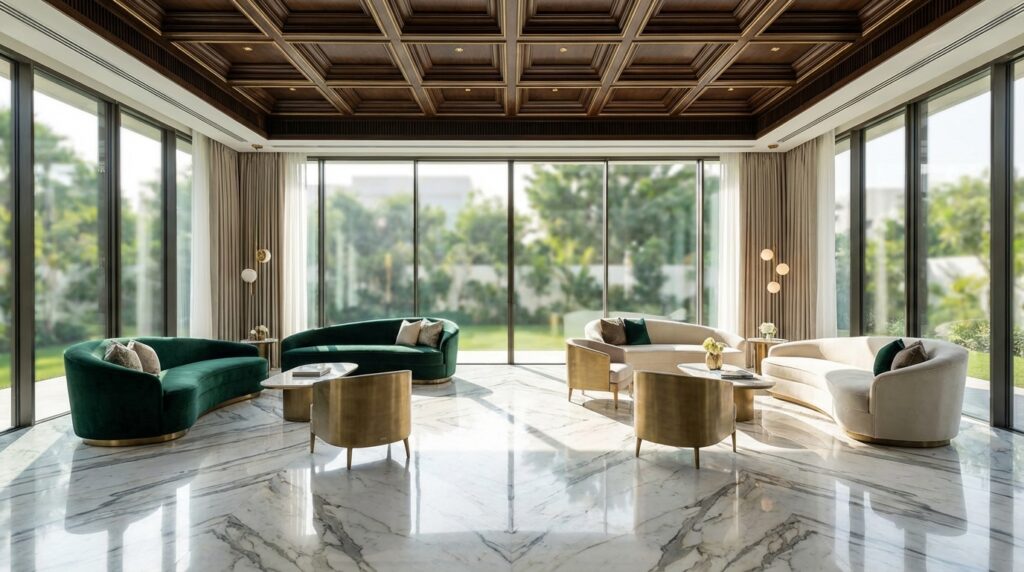
Ultra-luxury projects source slabs directly from Italian quarries. Calacatta Gold marble costs AED 1,200-1,800 per square meter installed with book-matched veining. Paonazzo or Arabescato marble reaches AED 2,200-3,400 per square meter. These materials require a thickness of 18mm for 5,000 sq. ft. installations to prevent cracking under thermal stress in Dubai, where temperatures fluctuate between 15°C and 48°C annually.
Hardwood flooring faces humidity challenges requiring acclimatization periods of 14-21 days before installation. European white oak engineered flooring costs AED 380-520 per square meter installed. Herringbone or chevron patterns add 35-45% to installation costs due to material waste and labor intensity. Exotic species like Brazilian walnut or reclaimed teak from Indonesian estates range from AED 850 to 1,450 per square meter installed.
Custom Joinery: The Cost Multiplier in Luxury Fit-Outs
Joinery accounts for 30-40% of visible budget differences between specification tiers. Standard packages use melamine-faced MDF or locally sourced plywood with polyurethane finishes. Kitchen cabinets cost AED 3,500-5,500 per linear meter, including soft-close hardware and quartz countertops.
Premium joinery employs Italian or German cabinetry systems. Poliform, Boffi, or Leicht kitchens range from AED 12,000 to 18,500 per linear meter, with integrated appliances. Walk-in closets using modular systems from Rimadesio or Porro cost AED 8,500-14,000 per linear meter with LED lighting and motorized drawers.
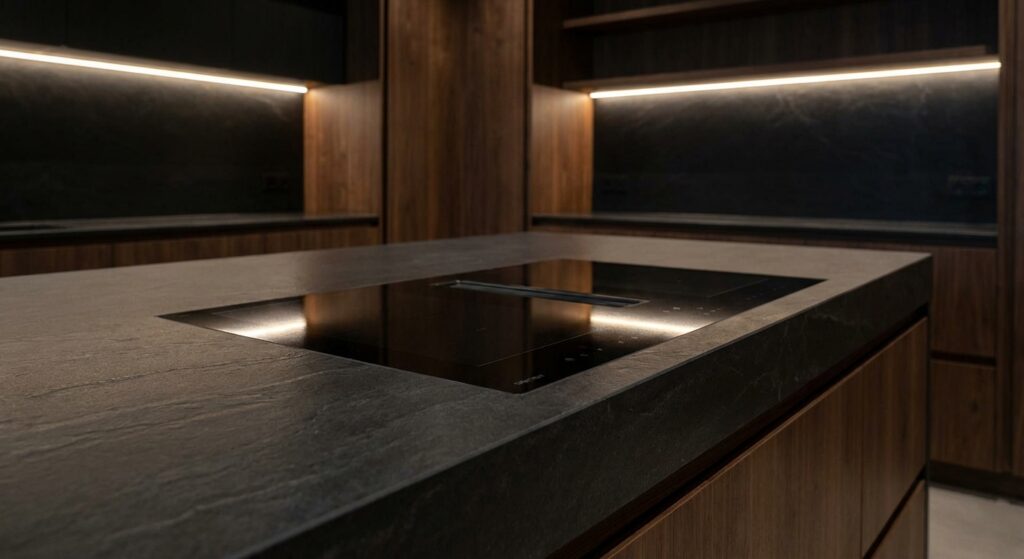
Ultra-luxury specifications commission bespoke joinery fabricated from solid walnut, oak, or exotic veneers. Kitchens with hand-rubbed lacquer finishes and stone countertops from Carrara or Dekton reach AED 28,000-45,000 per linear meter. Library paneling and coffered ceilings add AED 4,500-8,500 per square meter of wall coverage. Five-bedroom villas require 180-240 linear meters of joinery across the kitchen, bedrooms, studies, and storage areas.
Smart Home Systems: Integration Levels and Costs
Basic smart home packages integrate lighting control, HVAC scheduling, and security cameras through systems like Control4 or Crestron entry-level solutions. These installations cost AED 225,000-350,000 for a 5,000 sq. ft. villa, including programming and commissioning.
Premium integrations add motorized shades from Lutron or Somfy on 40-60 windows, whole-home audio with in-ceiling speakers in 12-16 zones, and integrated security with biometric access. Total costs range from AED 700,000 to 1,100,000, including network infrastructure with Cat6A cabling and enterprise-grade WiFi coverage.
Ultra-luxury systems incorporate custom programming for lighting scenes synchronized with circadian rhythms, integrated pool and landscape controls, and theater rooms with acoustical treatment achieving NC-25 or better noise criteria. Savant or Crestron Pyng systems with touchscreen interfaces in every room, plus iPad control, cost AED 1,900,000-3,250,000 fully installed.
Hidden Costs: Regulatory and Community Fees
Dubai Municipality charges permit fees calculated at 3.5-4% of the declared construction value for residential renovations. A AED 6 million fit-out incurs approximately AED 210,000-240,000 in DM fees, including plan approval, inspection visits, and completion certificates.
Community management companies require refundable deposits to protect common areas during construction. Springs and Meadows communities charge AED 50,000. Arabian Ranches requires AED 100,000. Emirates Hills and Palm Jumeirah developments require deposits of AED 150,000-250,000, refunded 60-90 days after project completion upon final inspection.
DEWA connection fees for upgraded electrical service range from AED 15,000 for a 300-amp service to AED 45,000 for a 600-amp service. Temporary construction power costs AED 8,000-12,000 for 6-9 month projects.
Design consultant fees typically range from 8-12% of construction value for standard projects, 12-18% for premium work requiring extensive custom detailing, and 18-25% for ultra-luxury projects with international procurement and on-site supervision throughout 12-18 month timelines.
Timeline Impact on Total Costs
Construction duration directly affects soft costs. Standard fit-outs are complete in 4-6 months with crews of 15-25 workers. Premium projects require 7-10 months with specialized trades for stone installation, custom metalwork, and millwork. Ultra-luxury fit-outs span 12-18 months due to international shipping timelines, custom fabrication periods, and sequential installation of temperature-sensitive materials.
Extended timelines increase costs through community fines for permit extensions (AED 5,000-10,000 per month), additional temporary power charges, and design team supervision fees. Projects that exceed initial timelines by 40% typically see overall cost increases of 12-18% relative to original budgets.
Material Sourcing and Import Considerations
Standard projects source 80-90% of materials from UAE suppliers and regional distributors. Premium specifications import 40-60% of finishes from Italy, Germany, or Spain. Ultra-luxury projects import 70-85% of materials, incurring 5% customs duties on most items, sea shipping freight costs of AED 180-320 per cubic meter, and air freight charges of AED 12-18 per kilogram for time-sensitive items.
Lead times affect scheduling. Local materials arrive within 2-4 weeks. European tiles and fixtures require 8-12 weeks. Custom Italian marble takes 14-18 weeks from quarry selection to delivery to Dubai. Bespoke joinery from European workshops needs 16-24 weeks for fabrication and shipping.
Quality Control and Project Management
Successful luxury fit-outs require rigorous quality protocols. Weekly site inspections document progress against specifications. Mock-up rooms verify finishes before full installation. Testing and commissioning of MEP systems takes 2-3 weeks for premium projects and 4-6 weeks for ultra-luxury installations with complex automation.
Project management fees of 5-8% cover coordination of 8-15 trade contractors, procurement logistics, and dispute resolution. These fees are essential on projects exceeding AED 5 million, where scheduling conflicts among marble installers, electricians, and joiners can cause costly delays without experienced oversight.
Cost Optimization Strategies
Budget-conscious clients achieve premium aesthetics through strategic specification. Using premium porcelain that replicates Calacatta marble saves 60-70% versus natural stone while providing superior stain resistance. Combining custom joinery in public spaces with modular systems in bedrooms reduces costs by 25-35% without compromising visible quality.
Value engineering during design phases identifies cost-neutral alternatives. Switching from Dornbracht to Gessi fixtures maintains Italian quality while saving 30%. Selecting Miele appliances instead of Gaggenau reduces kitchen costs by AED 85,000-120,000 with minimal performance differences for most users.
Phased execution allows clients to complete essential MEP and structural work immediately while deferring custom joinery or smart home upgrades to later phases. This approach reduces initial capital requirements by 30-40% while maintaining construction momentum.
Market Context and Price Trends
Dubai’s luxury fit-out market saw material costs rise by 18-23% between 2023 and 2025, according to construction consultants Turner & Townsend. Labor rates rose 12-15% during the same period as demand from Expo 2020 legacy projects and new developments absorbed skilled trades.
Specialized trades command premium rates. Italian marble installers earn AED 180-240 per day, compared to AED 85-110 for standard tile setters. Master carpenters working on bespoke joinery charge AED 200-280 per day, compared to AED 95-130 for production cabinet installers. These rate differences compound over 6-12-month projects, adding AED 180,000-350,000 to ultra-luxury budgets.
Currency fluctuations affect import costs. The Euro appreciated by 8% against the Dirham in 2024-2025, increasing the costs of Italian and German materials by the same amount. Projects with 60% imported content saw budgets increase by AED 320,000-480,000 on AED 8 million fit-outs due to exchange rate movements alone.
Comparative Analysis: Dubai vs. Other Global Markets
Dubai’s luxury fit-out costs compare favorably to other international markets. London ultra-luxury renovations cost £3,500-5,200 per square meter (AED 16,100-23,900 per sq.m.) according to UK housing ministry data. New York City premium renovations range from $1,800 to $ 3,200 per square foot (AED 6,600 to 11,750 per sq ft), based on New York City Department of Buildings permit valuations.
Dubai benefits from tax-free imports, lower labor costs than Western markets, and proximity to Asian manufacturing hubs. However, the emirate’s climate demands robust HVAC systems and moisture-resistant materials, which increase MEP budgets by 40-55% compared to temperate climates.
Warranty and Maintenance Considerations
Standard fit-outs typically include 12-month defect liability periods. Premium contractors extend warranties to 24 months on MEP systems and custom joinery. Ultra-luxury projects often include 36-60 month warranties with annual maintenance contracts.
Ongoing maintenance costs deserve consideration. VRF systems require professional servicing every 6 months at AED 4,500-7,000 per visit. Smart home systems need annual software updates and hardware checks costing AED 12,000-18,000. Natural stone floors require resealing every 18-24 months at AED 45-75 per square meter.
Five-year ownership costs for a 5,000 sq. ft. ultra-luxury villa add AED 380,000-520,000 to the initial capital investment, accounting for preventive maintenance, system upgrades, and material care. These figures exclude energy consumption, which varies based on HVAC efficiency and insulation quality.
Regulatory Compliance and Building Codes
Dubai Municipality enforces strict building codes updated in 2024. Fire-rated materials are mandatory in kitchens and utility rooms. Electrical installations must comply with BS 7671. Plumbing requires backflow prevention on all potable water lines.
Green Building Regulations require energy modeling for renovations exceeding 10,000 sq. ft. Smaller projects are exempt from these requirements but benefit from energy-efficient specifications that reduce DEWA bills by 30-45% annually. A 5,000 sq. ft. villa with standard HVAC consumes approximately AED 36,000-48,000 in electricity yearly. Premium VRF systems reduce consumption to AED 21,000-28,000. Ultra-luxury specifications with geothermal integration can reduce annual costs to AED 14,000-19,000.
Procurement and Supply Chain Management
Effective procurement separates successful projects from troubled ones. Long-lead items require ordering 4-6 months before installation dates. Marble slabs need to be booked when quarries cut matching blocks. Custom light fixtures from European manufacturers require 20-26 weeks from design approval to delivery.
Supply chain disruptions add contingency costs. Brexit caused delays in the shipment of UK-manufactured goods in 2021-2023. Red Sea shipping disruptions in 2024 temporarily increased freight costs by 40-60%. Prudent contractors maintain contingency budgets of 10-15% to cover unforeseen logistics costs.
Local warehousing for imported materials costs AED 45-85 per square meter monthly. Projects importing 200-300 cubic meters of materials incur AED 35,000-65,000 in storage fees over 8-12 month timelines. However, bulk importing reduces shipping costs by 25-35% versus multiple small shipments.
Insurance and Risk Management
Contractor’s all-risk insurance typically costs 0.8-1.2% of project value. An AED 8 million fit-out requires AED 64,000-96,000 in insurance premiums. This coverage protects against fire, water damage, theft, and third-party liability during construction.
Professional indemnity insurance for design consultants adds 1.5-2.5% to their fees. These policies cover errors and omissions in specifications that could result in material failures or code violations. Claims related to waterproofing failures or structural inadequacies demonstrate the importance of proper coverage.
Homeowners should verify contractor insurance certificates before making deposits. Uninsured contractors create liability exposure if workers are injured on-site or if construction damages neighboring properties. Dubai courts have held property owners jointly liable when uninsured contractors cause damages exceeding AED 500,000.
Financing Considerations for Large Fit-Outs
Banks offer renovation loans at 3.5-5.2% annual interest for projects exceeding AED 2 million. These facilities typically finance 70-80% of project costs with repayment terms of 24-60 months. Monthly payments on an AED 6 million loan at 4.5% over 48 months equal approximately AED 137,000.
Some developers offer fit-out packages bundled with property purchases, financing premium specifications at mortgage rates of 2.8-3.9% over 20-25 years. This approach reduces monthly cash flow requirements but significantly increases total interest costs.
Cash payment schedules typically break into 5-7 milestones: 20% deposit, 15% on mobilization, 20% at rough-in completion, 20% at finishing installation, 15% at substantial completion, and 10% retention released 60-90 days after handover. These terms protect both parties while maintaining contractor cash flow.
Realistic Budget Planning
First-time renovators underestimate costs by 30-50% according to project completion audits. Change orders during construction add 15-25% to initial budgets when clients modify specifications after work commences. Scope creep from “while we’re at it” additions contributes another 8-12%.
Prudent budgeting allocates funds as follows: 65-70% for construction, 12-15% for design and engineering, 8-12% for permits and fees, 5-8% for project management, and 10-15% contingency. Projects that exhaust contingency funds often compromise on finish quality or delete scope items to meet deadlines.
The difference between adequate and insufficient budgeting determines project success. Underfunded projects pause mid-construction, generating community fines, contractor demobilization costs, and material price increases during delays. Fully funded projects with appropriate contingencies are completed on schedule with specification integrity intact.